Owner’s Edge
Historic Tax Credits, ExplainedHow Old Buildings Can Pencil Out
Renovating a historic building costs more than new construction, but stacked incentives can close much of the gap. Here’s how they work, using one of our own projects.
By the Kuester Commercial team · November 2026 · 3 min read
Historic Main Street buildings have something new construction can’t buy: character and a location in the heart of town. The challenge is cost. Old buildings come with surprises, and the rents a small downtown supports don’t always cover a full renovation on their own. That’s where incentives come in.
The main incentives
- Federal historic tax credit: 20% of qualified rehabilitation costs for income-producing buildings listed on, or contributing to, the National Register, claimed over five years.
- South Carolina historic rehabilitation credit: a state credit on top of the federal one for income-producing historic buildings, with an optional higher-percentage track.
- South Carolina abandoned buildings credit: a state credit for rehabilitating buildings that have been mostly vacant for years.
- Bailey Bill: where a city or county has adopted it, the property tax assessment can stay at its pre-renovation value for a set number of years.
- Opportunity Zones: potential capital gains benefits for investments in designated areas.
A real example: The Mercantile
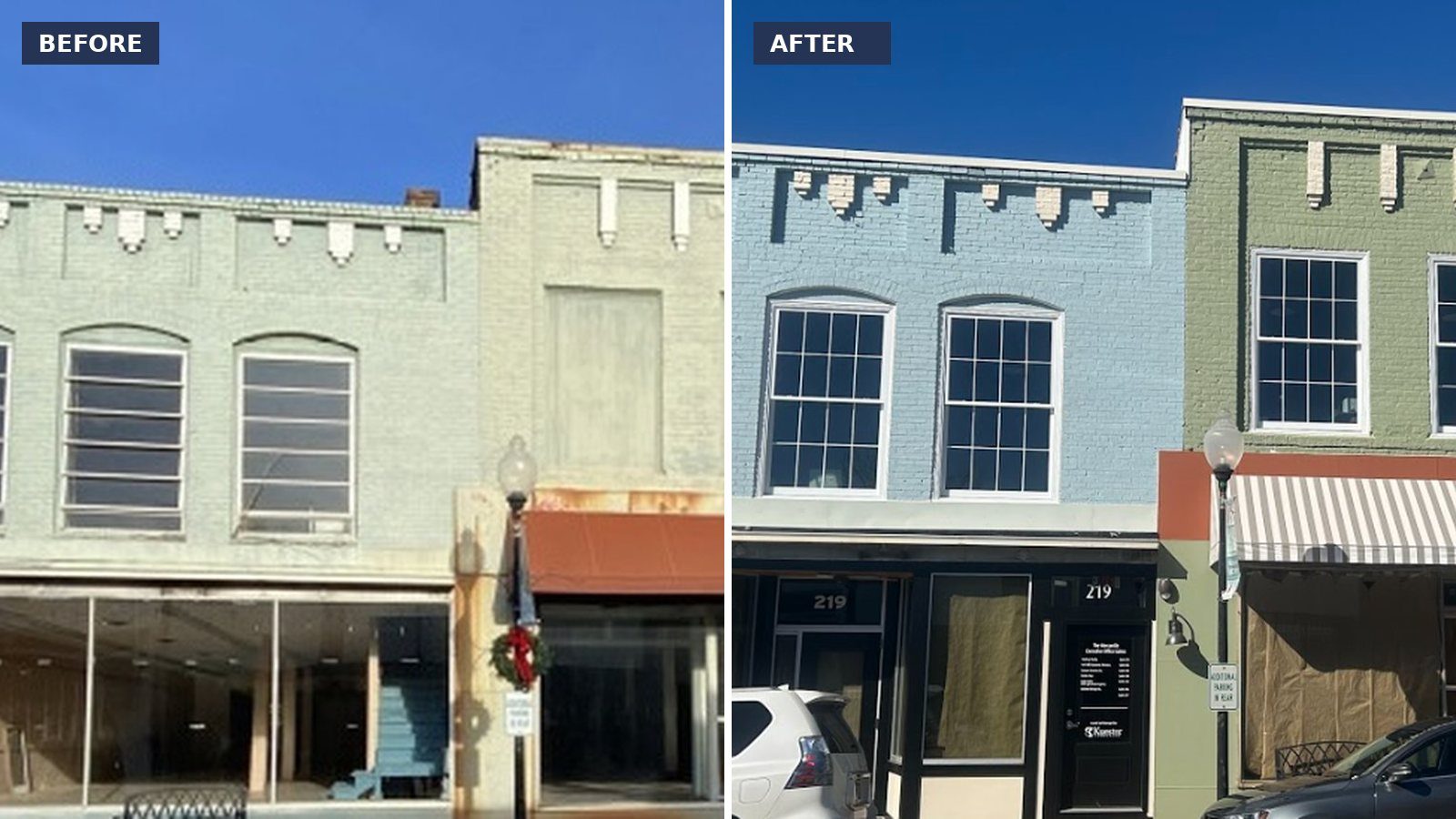
At 219–221 Main Street in Fort Mill, Kuester converted the upper floors of two historic storefronts into professional office suites. Stacking three credits returned 56% of the qualified rehabilitation costs.
Three credits returned 56% of the qualified rehab costs.
How the process works
Historic credits require approval before and after the work. Owners typically submit a three-part application through the State Historic Preservation Office and the National Park Service: Part 1 confirms the building’s historic significance, Part 2 describes the planned work, and Part 3 certifies the finished project. Starting construction before Part 2 is approved can put the credits at risk.
Is your building a candidate?
- Is it in a historic district or individually eligible for the National Register?
- Will it be income-producing after renovation?
- Has it been mostly vacant for an extended period?
- Has your city or county adopted the Bailey Bill?
Our development team has used these incentives in Fort Mill and Chester and can tell you which may apply to your property.
For discussion only, not tax or legal advice. Rules and eligibility change and vary by property; confirm with a CPA or tax attorney.